

 العربية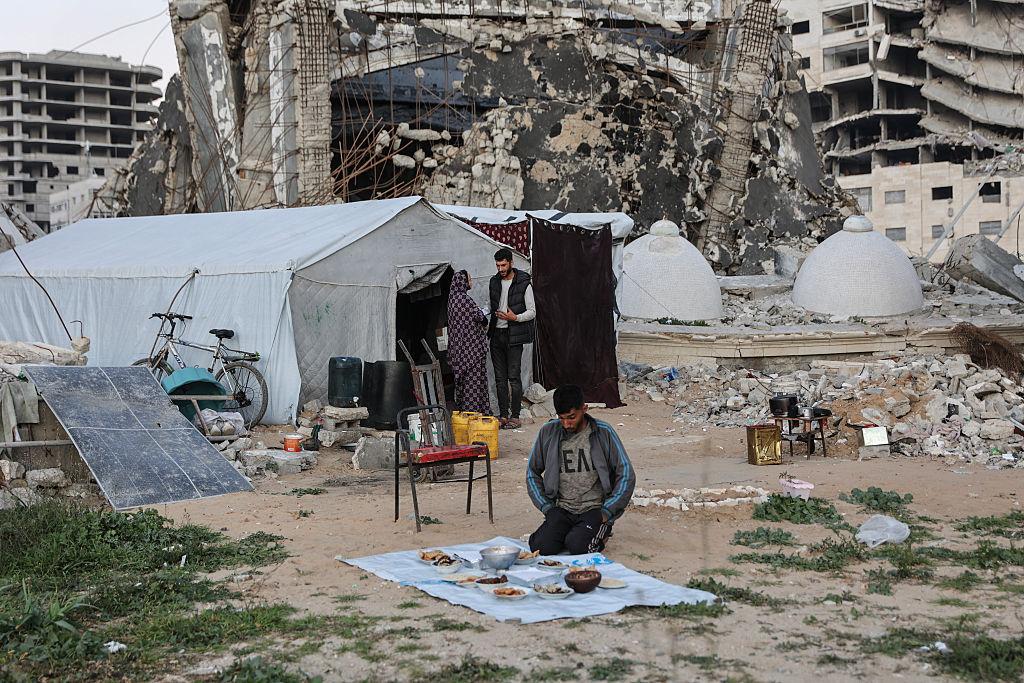
17 February 2026 | Peace and Security
As Ramadan begins in Gaza, families are trying to preserve traditions of joy and togetherness despite two years of war, displacement and economic collapse.
For many, the holy month now unfolds under tents pitched beside the rubble of destroyed homes.
Life beside the ruins
Walid Al-Assi once celebrated Ramadan with family meals and sweets such as qatayef. Today, he lives in a makeshift tent in Gaza City’s Al-Zarqa neighbourhood, beside what remains of his home.
He told UN News that while goods are visible in shops, he cannot afford them.
“Everything has changed now… I turn my face away from goods because I do not have the money to buy them.”
Suffering from diabetes and high blood pressure, and unable to walk easily, he says those living in tents urgently need assistance.
“We are living in a tragedy”
Nearby, Amal Al-Samri and her family try to create a symbolic Ramadan atmosphere. She smiles for her children as they sit outside their tent, but says life before the war was entirely different.
“Our life was beautiful… Today, there is nothing.”
The family has faced repeated displacement, flooding from seawater, and severe shortages of electricity and clean water.
According to the United Nations Office for the Coordination of Humanitarian Affairs (OCHA):
- Around 1.4 million people — nearly two thirds of Gaza’s population — are displaced
- Approximately 1,000 displacement sites are operating
- Most consist of overcrowded tents with little privacy or protection
High prices and limited purchasing power
Despite hardship, Ramadan decorations have appeared in Gaza City’s historic Zawiya market.
However, shop owners report severe price increases due to restricted supply flows.
Luay Al-Jamasi, who sells Ramadan lanterns, explained:
- A lantern that once cost 30 shekels now costs 60
- Limited goods entering Gaza have driven prices sharply upward
Many families walk through the market without buying anything, unable to afford even small decorations.
Holding onto hope
Even amid hardship, residents express determination to celebrate in their own way.
Maher Tarzi, a member of Gaza’s Christian community, visited the market singing traditional Ramadan songs in solidarity.
“People want to be happy… We’ve been through some difficult times, and it’s good that we’re still alive.”
He noted that while people try to resume daily life, purchasing power has dramatically declined.
At night, some areas glow faintly with lantern light — small symbols of resilience in a landscape marked by destruction.
Humanitarian Context
The humanitarian crisis in Gaza remains severe:
- Massive housing destruction
- Limited electricity and water access
- Continued displacement
- Economic collapse
- Strained humanitarian response
Ramadan, a month traditionally centred on community, generosity and shared meals, now highlights both deprivation and resilience.