
Category Archives: Environment

AI Must Not Decide Humanity’s Fate, UN Chief Warns Security Council

By Vibhu Mishra
Date: 24 September 2025
Category: Peace and Security


Artificial intelligence (AI) offers unprecedented opportunities but also carries grave risks if left unchecked, UN Secretary-General António Guterres told the Security Council during a high-level debate on Wednesday.

“AI is no longer a distant horizon – it is here, transforming daily life, the information space, and the global economy at breathtaking speed. The question is not whether AI will influence international peace and security, but how we will shape that influence.”

Promise and Peril

Mr. Guterres highlighted AI’s potential to anticipate food insecurity, support de-mining, and detect violence before it erupts. Yet without safeguards, he cautioned, AI can be weaponised.

Recent examples include:

  • AI-enabled targeting in armed conflicts
  • Cyberattacks on critical infrastructure
  • Deepfakes spreading disinformation, polarisation, and diplomatic crises

“The ability to fabricate and manipulate audio and video threatens information integrity… humanity’s fate cannot be left to an algorithm,” he warned.

Four Global Priorities

The UN chief urged governments to:

  1. Maintain human control over the use of force
  2. Develop coherent global regulations for AI
  3. Protect information integrity
  4. Close the “AI capacity gap” between rich and poor nations

He reiterated his call for a ban on lethal autonomous weapons systems that operate without human control, with the goal of adopting a legally binding treaty by next year. Decisions on nuclear weapons, he stressed, “must rest with humans – not machines.”

Governance Efforts Underway

Mr. Guterres pointed to recent steps, including:

  • An independent scientific panel on AI
  • A global dialogue on AI governance, convening in New York

These initiatives aim to connect science, policy, and practice, ensuring all nations have a voice and reducing governance fragmentation.

Calls for Inclusion

Yejin Choi, Senior Fellow at Stanford University’s Institute for Human-Centered AI, warned that current AI progress is concentrated among a few companies and nations.

“When only a few have the resources to build and benefit from AI, we leave the rest of the world waiting at the door.”

She urged investment in smaller, adaptive systems that lower entry barriers, and pressed for stronger linguistic and cultural diversity, noting AI’s persistent underperformance in non-English languages.

Act Without Delay

Closing the session, Mr. Guterres warned that time is running out to establish effective rules.

“From nuclear arms control to aviation safety, humanity has faced destabilising technologies before – and responded with rules, institutions, and respect for human dignity. The window is closing to shape AI – for peace, for justice, for humanity. We must act without delay.”
‘No End’ Expected to Floods and Storms as Global Heating Continues

Date: 18 September 2025
Category: Climate and Environment


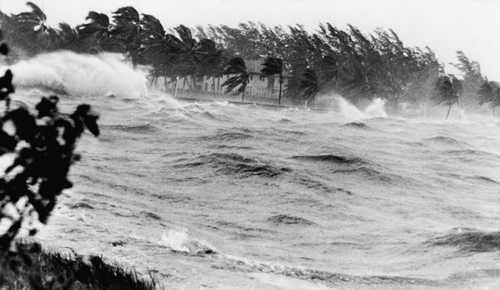
The world’s water systems are under mounting stress from climate change, with floods, storms, and droughts increasingly threatening lives and livelihoods across the globe, the UN World Meteorological Organization (WMO) warned on Thursday.

“Water-related hazards continue to cause major devastation this year,” said Celeste Saulo, WMO Secretary-General. “Unfortunately, we see no end to this trend.”

Rising Temperatures, Rising Risks

The WMO’s latest report on the state of global waterways confirms that 2024 was the hottest year in 175 years of record-keeping, with average surface temperatures 1.55°C above pre-industrial levels (1850–1900).

Hotter air holds more moisture, intensifying rainfall and making severe floods and storms more frequent. Recent disasters include:

  • Monsoon flooding in Pakistan
  • Flash floods in Bali, Indonesia
  • Deadly flooding in South Sudan

Storm Boris and Beyond

The legacy of Storm Boris in September 2024 still looms large. The storm triggered once-in-a-century floods across central and eastern Europe, displacing tens of thousands. Yet experts warn such rare disasters are now likely to occur more often than statistics once suggested.

“A ‘century event’ happened – but statistics show extreme events may become more frequent,” said Stefan Uhlenbrook, WMO Director of Hydrology.

Himalayan and Amazon Disruptions

Other examples of climate-driven disruption include:

  • Himalayan regions (Himachal Pradesh, Jammu & Kashmir): Early and extreme monsoon rains.
  • Amazon Basin: Severe drought worsened by El Niño.
  • North America, Mexico, southern Africa: Below-average rainfall, compounding water insecurity.

While El Niño contributed, WMO scientists stress that climate change is the primary driver of extreme droughts and floods worldwide.

A Connected World, A Broken Cycle

The WMO report found wetter-than-normal conditions in Africa’s Lake Victoria region, Kazakhstan, southern Russia, Pakistan, India, Iran, and northeastern China. At the same time, only one-third of the world’s river basins reported normal levels, underscoring widespread water cycle disruption.

Glaciers are retreating at alarming rates:

  • In 2024, glaciers lost 450 gigatonnes of ice – equal to 180 million Olympic swimming pools.
  • This added 1.2 mm to global sea levels, threatening hundreds of millions in coastal regions.

“2024 was the third straight year with widespread glacial loss,” Ms. Saulo said, warning of growing flood risks worldwide.

The Urgent Need for Data

The WMO emphasized that better monitoring of streamflow, groundwater, soil moisture, and water quality is essential. Many regions remain critically under-monitored, leaving governments and communities unprepared for worsening crises.

Afghanistan Quake: ‘Communities Are Struggling With Basic Survival’

Date: 8 September 2025
Category: Humanitarian Aid


A senior UN humanitarian official has urged swift international support for survivors of the magnitude 6 earthquake in eastern Afghanistan, warning that communities are fighting for basic survival and face a perilous winter without immediate assistance.

“We saw families whose lives had been shattered within minutes,” said Shannon O’Hara, Head of Strategy for OCHA in Afghanistan, speaking from Jalalabad. “Additional funding is urgently needed.”

Scale of Impact

  • ~40,000 people affected across Nangarhar, Kunar and nearby provinces
  • 5,000+ homes destroyed
  • 49 villages reached so far by OCHA teams
  • Access constraints: landslides, blocked one-lane mountain roads, and long on-foot approaches

Women and Children Bear the Brunt

Emergency responders are prioritizing women, children, and people with disabilities.

  • 11,600 pregnant women are estimated to be affected (UNFPA)
  • OCHA is deploying women health workers and expanding nutrition, psychosocial, and counseling services

Disease Risks Rising

Families are sheltering in tents or in the open, lacking clean water and sanitation.

  • Cholera is endemic, and 92% of assessed communities are practicing open defecation
  • Urgent scale-up of WASH (water, sanitation, hygiene) services is critical to avert outbreaks

Aid in Motion — But Not Enough Yet

  • 43,000 people have received ready-to-eat meals; tents, blankets, and sanitation kits are being distributed
  • OCHA has released $10 million for life-saving supplies and is finalizing an emergency response plan
  • WHO has delivered ~80 metric tonnes of emergency health supplies to date, including trauma and surgery kits, PHC kits, NCD kits, and essential medicines, with 35+ metric tonnes landing in Kabul on Monday for onward dispatch to hardest-hit areas

Winter Threat and Access Constraints

Heavy rain could flood displacement sites; aftershocks may trigger new landslides; and snow will soon block vital roads.

“If we don’t act now, these communities may not survive the coming winter,” Ms. O’Hara warned.


Key Needs (Immediate)

  • Shelter: durable tents, winterization kits, repair materials
  • Health: trauma care, maternal health, NCD medications, mobile clinics
  • WASH: safe water, latrines, cholera prevention, hygiene kits
  • Food & NFIs: ready-to-eat rations, blankets, cooking sets
  • Protection: services for women and children, psychosocial support

How Donors and Partners Can Help (Action Points)

  • Front-load flexible funding to OCHA’s emergency plan and pooled funds
  • Pre-position winter supplies before roads close
  • Scale mobile health/WASH teams to high-risk valleys
  • Support women-led delivery to ensure equitable access
  • Back logistics corridors (road clearance, fuel, local transport)

Air New Zealand scraps 2030 carbon emissions target

Flag carrier cites lack of newer fuel-efficient aircraft and alternative jet fuels as reasons for not meeting the target.

Published On: 30 July 2024

Source: Al Jazeera and news agencies

Air New Zealand has abandoned its 2030 carbon emissions targets, citing the unavailability of newer fuel-efficient aircraft and alternative jet fuels.

Air New Zealand Chief Executive Greg Foran announced on Tuesday that potential delays in the airline’s fleet renewal plan posed “an additional risk to the target’s achievability.”

“The airline may need to retain its existing fleet longer than planned due to global manufacturing and supply chain issues that could potentially slow the introduction of newer, more fuel-efficient aircraft into the fleet,” Foran said in a statement. “Given so many levers needed to meet the target are outside our control, the decision has been made to retract the 2030 target and withdraw from the SBTi network immediately.”

The airline will also withdraw from the Science Based Targets Initiative (SBTi), which assists companies in reducing emissions in line with the Paris Agreement.

New Zealand’s flagship airline is considering a new near-term carbon emissions reduction target that would better reflect the industry’s challenges related to aircraft and alternative jet fuel availability.

Air New Zealand Chair Therese Walsh reaffirmed the airline’s commitment to achieving net zero carbon emissions by 2050.

“Our work to transition away from fossil fuels continues, as does our advocacy for the global and domestic regulatory and policy settings that will help facilitate Air New Zealand, and the wider aviation system in New Zealand, to do its part to mitigate climate change risks,” Walsh said.

Air New Zealand initially aimed to reduce overall carbon emissions by 16.3 percent by 2030, compared to a 2019 baseline.

The announcement comes as airlines face longer routes due to the conflicts in Gaza and Ukraine, increasing their demand for emissions-generating fuel.

Read the original Artical

The Heat is On: UN Chief Urges Immediate Action to Combat Rising Temperatures

By Vibhu Mishra, July 25, 2024 – Climate and Environment

UN Secretary-General António Guterres issued a stark warning on Thursday, calling for urgent global action to protect billions of people exposed to the devastating effects of extreme heat, as temperatures continue to rise unabated worldwide.

The call to action follows record temperatures and lethal heatwaves affecting regions from the United States and Europe to Africa’s Sahel and the Middle East, with several hundred fatalities recorded this summer alone. Notably, over 1,300 lives were lost to scorching heat during the Hajj pilgrimage.

“Billions of people are facing an extreme heat epidemic – wilting under increasingly deadly heatwaves, with temperatures topping 50 degrees Celsius around the world. That is 122 degrees Fahrenheit – halfway to boiling,” Guterres stated at a press conference at UN Headquarters in New York.

Protecting the Vulnerable

Highlighting the uneven impact of heatwaves, the UN chief emphasized that urban poor, pregnant women, children, the elderly, people with disabilities, the sick, and the displaced are most at risk. These groups often reside in inadequate housing with limited access to cooling solutions.

UN estimates reveal that heat-related deaths among those over 65 have surged by 85% over the past two decades. Furthermore, while 25% of children currently face frequent heatwaves, this figure could rise to nearly 100% by 2050.

“We must respond by massively increasing access to low-carbon cooling, expanding passive cooling – such as natural solutions and urban design, and cleaning up cooling technologies while boosting their efficiency,” Guterres urged. He also called for increased financial support to shield communities from “climate chaos.”

Protecting Workers

Guterres underscored the need to enhance worker protections, noting that over 70% of the global workforce, or 2.4 billion people, are at significant risk from extreme heat. The situation is especially dire in Africa and the Arab regions, where over 90% and 80% of workers, respectively, are exposed. In Asia and the Pacific, 75% of workers are at risk.

Heat stress at work is projected to cost the global economy $2.4 trillion by 2030, up from $280 billion in the mid-1990s.

“We need measures to protect workers, grounded in human rights,” Guterres stressed. “And we must ensure that laws and regulations reflect the reality of extreme heat today – and are enforced.”

Boosting Resilience

The UN chief also highlighted the need to bolster the resilience of economies and societies, citing the adverse effects of extreme heat on infrastructure, crop yields, water supplies, health systems, and electricity grids. Cities, experiencing heating at twice the global average rate, are particularly vulnerable.

To tackle these challenges, Guterres called for comprehensive, data-driven action plans tailored to specific countries, cities, and sectors. “We need a concerted effort to heatproof economies, critical sectors, and the built environment.”

Fighting the Root Cause

Guterres reiterated the importance of addressing the broader impacts of extreme heat, including hurricanes, floods, droughts, wildfires, and rising sea levels. He stressed the urgent need to reduce reliance on fossil fuels and to enhance climate action to limit global temperature rise to 1.5°C.

Governments, particularly G20 nations, the private sector, cities, and regions must urgently adopt climate action plans. Countries must also phase out fossil fuels and halt new coal projects.

“They must act as though our future depends on it – because it does,” Guterres concluded.

For more information, visit the UN’s official announcement.

Rising Heat in Europe and Central Asia Claims Nearly 400 Children Annually, Reports UNICEF

July 24, 2024 – Climate and Environment

Soaring summer temperatures across Europe and Central Asia are resulting in the deaths of nearly 400 children annually, according to a new analysis by the United Nations Children’s Fund (UNICEF) released on Wednesday.

UNICEF’s data from 2021 reveals that 377 children died from heat-related illnesses in 23 countries within the region. Notably, half of these fatalities occurred within the first year of life.

“Around half of children across Europe and Central Asia – or 92 million children – are already exposed to frequent heatwaves in a region where temperatures are rising at the fastest rate globally,” said Regina De Dominicis, UNICEF Regional Director for Europe and Central Asia.

Health Complications from Rising Temperatures

De Dominicis warned that high temperatures can swiftly complicate a child’s health, posing serious and potentially life-threatening risks without timely care.

UNICEF’s findings highlight that heat exposure can adversely affect children even before birth, leading to pre-term births, low birth weight, stillbirths, and congenital anomalies. Heat stress can also directly result in death, impact infant growth, and pave the way for pediatric diseases.

Moreover, UNICEF reported that “extreme heat caused the loss of more than 32,000 years of healthy life among children and teenagers in the region.”

Urgent Recommendations

The year 2024 has experienced unprecedented high temperatures, with June marking the hottest month on record globally. This follows 13 consecutive record-setting months.

In response, UNICEF is urging governments in Europe and Central Asia to invest in “heat health action plans and primary healthcare to more adequately support heat-related illness among children.”

The agency recommends additional measures such as:

  • Implementing heat alert systems.
  • Ensuring educational facilities reduce temperatures in play areas.
  • Securing safe drinking water provision.
  • Equipping buildings to minimize heat exposure.
  • Establishing comprehensive strategies to mitigate heatwave impacts, particularly on children.

UNICEF is actively collaborating with governments and communities to “build resilience against heatwaves” by educating teachers, family members, and community health workers on combating heat stress.

For more details, visit the original announcement.