
 العربية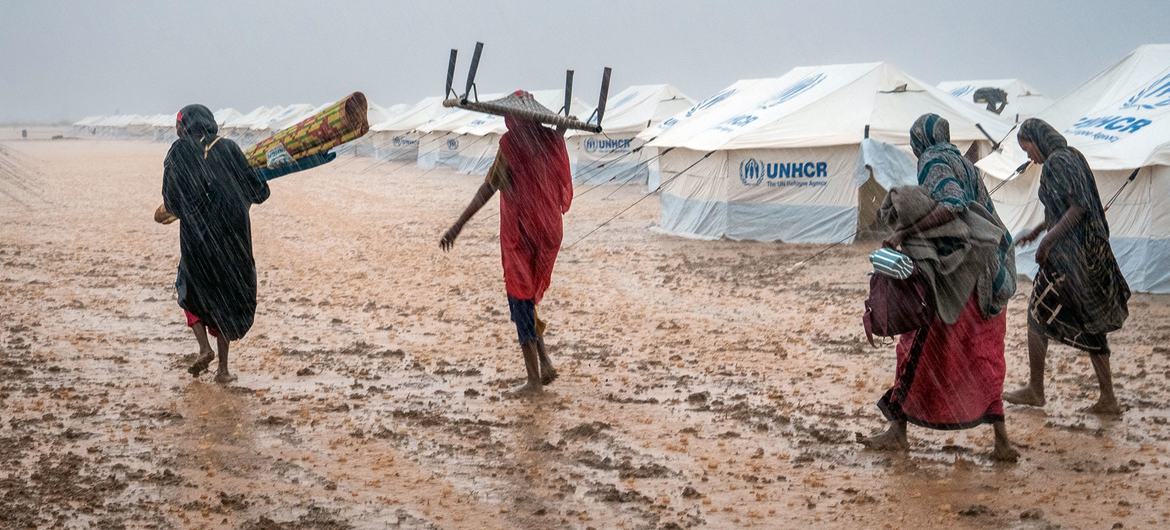
After nearly three years of devastating conflict, Sudan has fallen into what the UN human rights chief describes as “an abyss of unimaginable dimensions.” Yet amid the suffering, he says, the resilience of the Sudanese people endures.
Speaking in Nairobi after a five-day mission to Sudan, Volker Türk, the UN High Commissioner for Human Rights, said he had witnessed “a chronicle of cruelty unfolding before our very eyes”, while also encountering extraordinary courage and solidarity among civilians.
He urged all actors with influence—including regional players and those supplying weapons or profiting from the conflict—to take urgent action to end the war.
A people not broken
Mr. Türk last visited Sudan in November 2022, when he was inspired by civil society leaders, particularly women and young people who led the 2018 revolution.
Today, he said, the war between the Sudanese Armed Forces (SAF) and the Rapid Support Forces (RSF) has affected every part of the country. Yet the core aspirations of the Sudanese people—for peace, justice and freedom—remain intact.
“I bore witness in Sudan to the trauma of unspeakable brutality,” he said,
“but also to the resilience and defiance of the human spirit.”
Young people on the frontlines of aid
During his visit, Mr. Türk met volunteers—many of them young—who are organising and delivering humanitarian assistance under extreme conditions.
Often facing bureaucratic obstruction, detention, and violence, they continue to support their communities.
One volunteer told him:
“The price of war is being paid by young people. Sudanese youth are on the frontlines, serving those most in need.”
Attacks on civilian infrastructure
The High Commissioner strongly condemned attacks on essential civilian infrastructure, including the Merowe dam and hydroelectric power station, which once supplied 70 per cent of Sudan’s electricity.
Repeated drone strikes—attributed to the RSF—against such facilities, he warned, are serious violations of international law and may amount to war crimes.
He called on both parties to immediately halt attacks on:
- Markets
- Health facilities
- Schools
- Shelters
- Other objects indispensable to civilian survival
Displacement, grief and shattered childhoods
Mr. Türk met people displaced from El Fasher in North Darfur, now living more than 1,200 kilometres away in camps such as Al Afad.
Among them:
- A four-year-old child who lost his hearing due to bombardment
- A three-year-old who no longer smiles
- A woman who saw her husband and only son killed and remains bedridden from trauma and a gunshot wound
“These are wounds that go far beyond the physical,” he said.
Sexual violence as a weapon of war
The rights chief described systematic sexual violence as one of the most horrifying features of the conflict.
“In Sudan, women and girls’ bodies have been weaponized,” he said.
He shared the testimony of *Aisha (20)**, who was abducted while fleeing El Fasher. Her brother was shot when he tried to protect her, and her mother beaten as she begged the attackers to take her instead.
Sexual violence, Mr. Türk stressed, is being used deliberately as a weapon of war—a grave crime under international law.
Risk of further atrocities
Mr. Türk warned that crimes committed in El Fasher risk being repeated in the Kordofan region, where fighting has intensified.
This comes amid:
- Famine conditions in Kadugli
- High risk of famine in Dilling and surrounding areas
He also condemned the growing use of advanced weaponry, including drones, saying it is “despicable” that vast sums are spent on arms instead of relieving civilian suffering.
Militarisation and shrinking civic space
The High Commissioner raised alarm over:
- Arming of civilians
- Recruitment and use of children
- Targeting of journalists and civil society through intimidation and smear campaigns
Such trends, he warned, are accelerating the breakdown of Sudanese society.
A plea to put people first
Mr. Türk concluded by urging all parties to:
- Protect civilians and civilian infrastructure
- Guarantee safe passage for those fleeing conflict
- Allow unimpeded humanitarian access
- Release civilians detained for alleged “collaboration”
- Account for missing persons and treat detainees humanely
“I urge all those involved to set aside power games and personal interests,” he said,
“and focus on the common interests of the Sudanese people.”
Human rights, he emphasized, must be central to ending the war and building sustainable peace.
“This is difficult,” he acknowledged,
“but certainly not impossible—with the resilience and power of the Sudanese people.”
*Name changed for protection.