
 العربية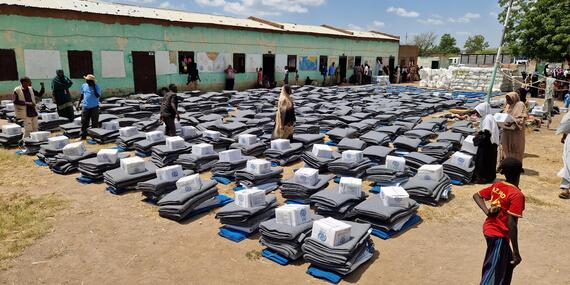
3 February 2026 | Humanitarian Aid
Sudan is now the world’s most severe humanitarian emergency, the United Nations’ top relief official warned at a donor conference in Washington, DC, calling for urgent funding and stronger diplomatic action as the conflict approaches its third year.
“Too many days of famine and brutality”
Tom Fletcher, the UN Emergency Relief Coordinator, said the conflict between the Sudanese Armed Forces (SAF) and the Rapid Support Forces (RSF) has plunged millions into famine, displacement and extreme vulnerability.
“There have been too many days of famine, of brutal atrocities, of lives uprooted and destroyed,” he said, highlighting that women and girls continue to face “terrifying sexual violence.”
Fighting began in April 2023 and rapidly spread across a country already struggling with political instability, ethnic tensions and climate shocks.
Move from concern to concrete action
Mr. Fletcher urged governments and regional powers to shift from statements of concern to practical measures:
- Increased humanitarian funding
- Political pressure for a ceasefire
- Guarantees of safe humanitarian access
The UN supports diplomatic efforts led by the “Quad” —
- United States
- Egypt
- Saudi Arabia
- United Arab Emirates
These efforts aim to secure a humanitarian truce and demilitarize key areas to allow aid to reach civilians.
“The guns must fall silent and a path to peace must be charted,” Fletcher said.
UN 2026 humanitarian response plan
Under its 2026 response framework, the United Nations aims to reach more than 20 million people across Sudan.
To do so, it requires approximately $2.9 billion in funding.
However, money alone is not enough. Fletcher stressed that:
- Aid workers must have safe, unhindered access
- Civilians must be protected
- Blockades and bureaucratic obstacles must end
“Let today be at last the signal that the world is uniting in solidarity for practical impact,” he said.
Crisis intensifies on the ground
While diplomatic discussions continue, fighting has escalated in parts of South Kordofan. Media reports indicate government forces entered Kadugli after months of siege and recently broke the blockade of Dilling.
Meanwhile, displacement continues to surge.
According to the United Nations High Commissioner for Refugees (UNHCR):
- 11.7 million people have been forcibly displaced
- 7 million internally displaced
- 4.5 million have fled to neighbouring countries
In camps and makeshift settlements, displaced families face:
- Severe food shortages
- Limited healthcare
- Inadequate water and sanitation
- Insufficient shelter
- Disrupted education