

Gaza: Winter Storms Deepen an Already Dire Humanitarian Crisis, UN Warns

The humanitarian situation across the Gaza Strip remains extremely critical, with severe winter storms threatening to undo recent progress in aid delivery, the United Nations warned on Monday.

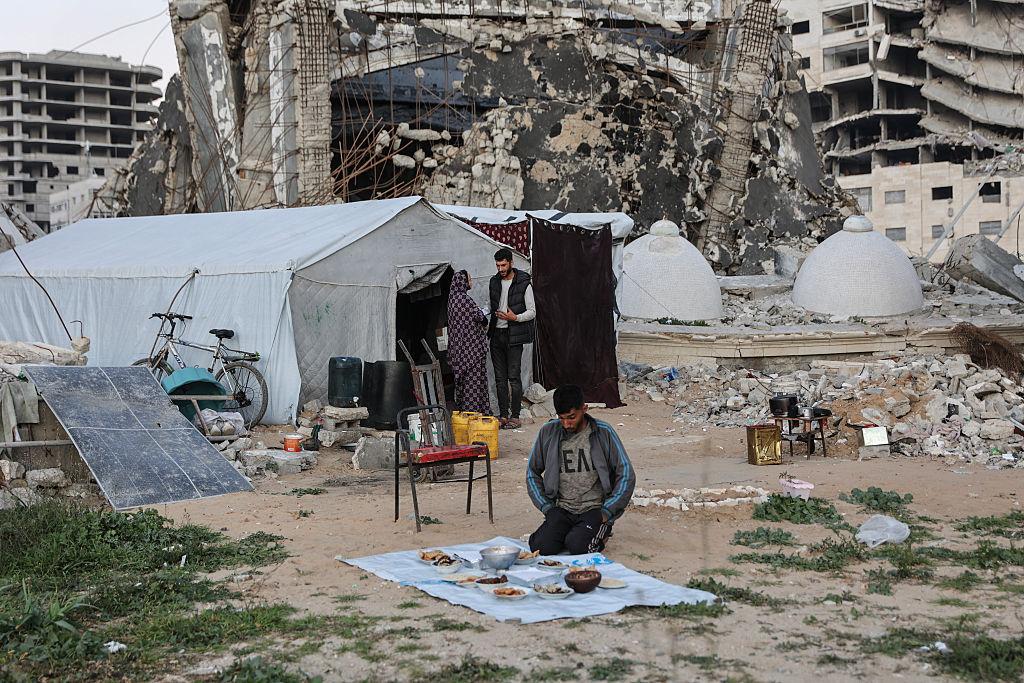
Briefing journalists in New York, Stéphane Dujarric, spokesperson for the United Nations Secretary-General, said heavy rains and strong winds are damaging and destroying fragile shelters, leaving tens of thousands of displaced people exposed to cold, mud, and flooding.

“During the past week, our partners delivered supplies to 28,000 families, including 1,600 tents, 16,000 tarpaulins and 27,000 blankets,” he said, stressing that needs remain overwhelming.


More than a million still in urgent need

Despite ongoing relief efforts, at least 1.1 million people—nearly half of Gaza’s population—continue to require urgent humanitarian assistance as weather conditions worsen.

A new storm that struck on Friday once again flooded makeshift camps, destroying tents and leaving thousands without protection. UN teams and humanitarian partners are assessing damage and prioritising the most vulnerable, but they warn that tents are only a temporary solution.

According to the UN, durable shelter solutions are urgently needed, including:

  • Construction toolkits and building materials
  • Cement and heavy machinery to clear rubble
  • Sustained funding to move from emergency aid to early recovery

Infant deaths linked to hypothermia

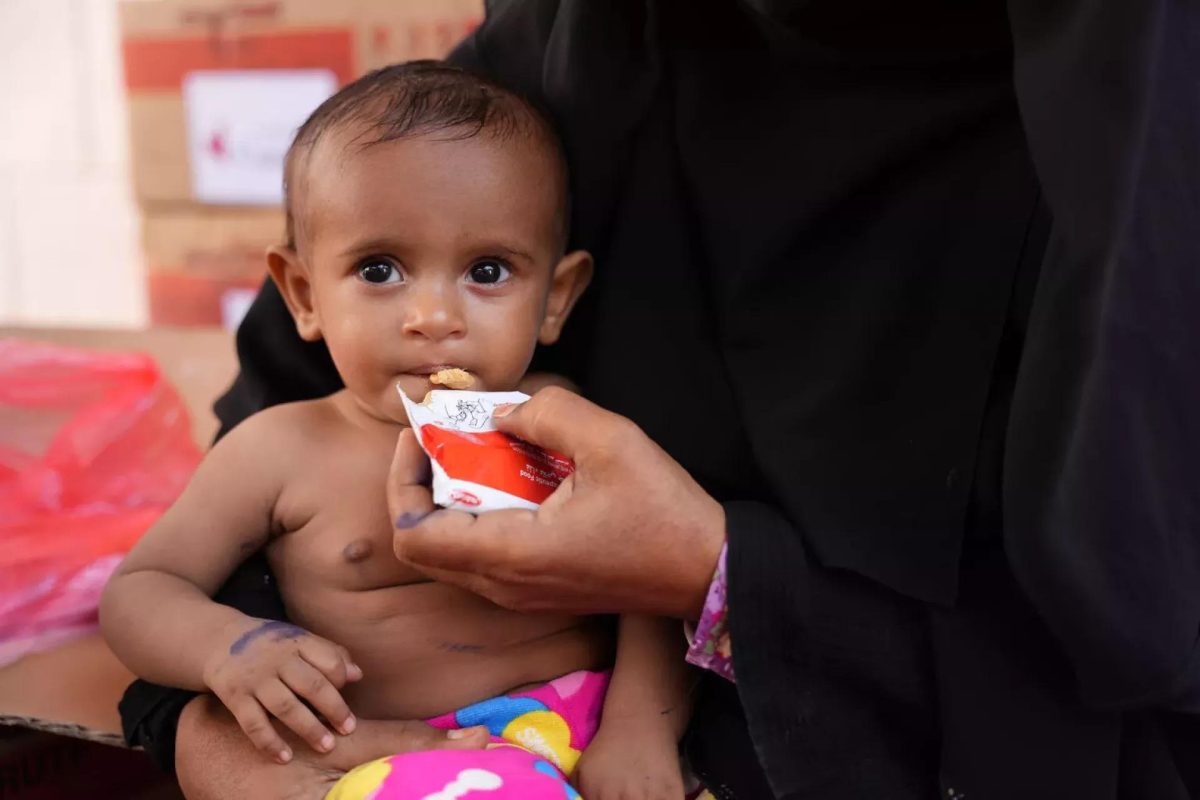
Children remain among the hardest hit by the crisis.

Health partners report that another infant has died from hypothermia, bringing the total number of reported weather-related infant deaths to four, all of them very young children, according to figures from Gaza’s Ministry of Health.

Since the ceasefire and through the end of 2025, humanitarian partners have:

  • Distributed over 310,000 winter clothing kits for children
  • Provided 112,000 pairs of shoes
  • Installed 150 specialised tents serving as child-friendly and safe spaces

Malnutrition and health concerns

Nutrition teams screened more than 76,000 children last month alone, identifying:

  • Around 4,900 cases of acute malnutrition
  • Including over 820 cases of severe acute malnutrition

In total, nearly 95,000 cases of acute malnutrition were identified across Gaza during 2025, underscoring the scale of the public-health emergency.


Education under threat

Despite the crisis, education partners continue efforts to protect children’s right to learn.

Last week, 18 new temporary learning spaces opened, supporting about 35,000 students. Gaza now has 440 operational temporary learning spaces, serving approximately 268,000 children.

However, the UN reports that education supplies are still being blocked from entering Gaza by Israeli authorities, who argue that education is not a priority during the first phase of the ceasefire.

“We do believe that it is a critical activity,” Mr. Dujarric said.


A race against time

As winter conditions intensify, UN officials warn that without sustained access, funding, and durable shelter solutions, Gaza’s humanitarian situation could deteriorate even further—especially for children, the displaced, and those already weakened by hunger and illness.

At the Heart of Change: Spotlight Initiative Showcases Breakthroughs in Ending Gender-Based Violence

Putting women and girls “at the heart of every decision” is essential to ending gender-based violence, according to Spotlight Initiative Global Coordinator Erin Kenny.

Since its launch in 2017, the UN–EU partnership has worked across regions to prevent and respond to gender-based violence (GBV), including sexual violence, femicide, human trafficking, and labour exploitation.

The urgency remains stark: one in three women worldwide has experienced physical or sexual violence, with even higher rates in some countries.

A new Spotlight report highlights how community-driven, survivor-centred approaches are delivering real change.


Empowerment and Inclusion in Zimbabwe

In rural Zimbabwe, Ndakaitei Matare, a woman with a physical disability, is helping transform lives by leading disability support groups that raise awareness about GBV, rights, and inclusion.

Through a partnership between Spotlight and the government, women with disabilities—long excluded from services—are now organizing, sharing knowledge, and advocating for equal access to education, healthcare, and economic opportunities.

“We are capable of doing a lot if we unite and work together,” Matare said.


Improved Access to Justice for Survivors

Spotlight has strengthened survivor-friendly justice systems, expanding Victim-Friendly Courts that provide safe, supportive spaces for women and children.

In Zimbabwe, judicial authorities now offer transport and food allowances to survivors and have expanded courts equipped with separation rooms, reducing retraumatisation and barriers to justice.


Supporting Child Survivors in Haiti

In Haiti, Spotlight has supported survivors like Taïna, who was kidnapped and raped by gang members at age 15.

With Spotlight’s support, she received medical care, trauma counselling, safe housing, education support, livelihood training, and emergency relocation.

“In this environment, I could finally breathe,” she said.

Despite the scale of violence—more than one in three Haitian women has experienced partner violence—Spotlight’s integrated services are helping survivors rebuild their lives and futures.


Protecting Migrant Women Workers in Thailand

Women migrant workers remain among the most vulnerable to exploitation.

In Thailand, Spotlight has helped women like Namwaan, who migrated from Myanmar and endured long hours, low pay, and abuse in factory work.

Through awareness campaigns, airport help desks, and training for service providers, women migrant workers are learning about their rights and how to seek help.

“This programme gives millions of women hope for decent work free from violence,” Namwaan said.


Ending Corporal Punishment in Tajikistan

In 2023, Tajikistan became the 66th country worldwide to ban corporal punishment—an achievement supported by Spotlight.

The initiative helped establish:

  • 15 victim support rooms offering medical, psychological, and referral services
  • Community-level prevention, including religious leaders as advocates for gender equality
  • A national school incident-reporting mechanism, now adopted by the government and set to expand nationwide by 2030

A Proven Model for Lasting Change

Across continents, Spotlight’s work shows that lasting change happens when women and girls lead, institutions are strengthened, and communities are engaged.

By centring survivors, building inclusive systems, and shifting harmful norms, the initiative demonstrates that ending gender-based violence is not only possible—but already underway.

Global Economy Shows Resilience but Growth Remains Subdued, UN Report Finds

The global economy has shown notable resilience over the past year despite trade tensions, shifting policies, and geopolitical uncertainty. However, growth remains weak and well below pre-pandemic levels, according to the UN’s flagship World Economic Situation and Prospects 2026 report, released on Thursday.

The report projects global economic growth of 2.7 per cent in 2026, slightly below the 2.8 per cent recorded in 2025 and far under the pre-pandemic average of 3.2 per cent.

While the sharp rise in United States tariffs created new trade frictions, the absence of broader escalation helped prevent major disruptions to global commerce, the report noted.


Resilience masks deeper vulnerabilities

Short-term resilience has been supported by solid consumer spending, easing inflation, and looser financial conditions. Yet the UN warns that structural weaknesses persist.

Low investment levels, tight fiscal space, and elevated uncertainty could lock the global economy into a prolonged period of slower growth than before the COVID-19 pandemic.

Although trade tensions have eased somewhat, the full impact of higher tariffs and macroeconomic uncertainty is expected to become more visible in 2026.

Financial conditions have improved due to monetary easing, but risks remain high—particularly from elevated asset prices, especially in sectors linked to rapid advances in artificial intelligence (AI).


Developing countries under pressure

High debt levels and borrowing costs continue to constrain many developing economies.

UN Secretary-General António Guterres warned that:

“A combination of economic, geopolitical and technological tensions is reshaping the global landscape, generating new economic uncertainty and social vulnerabilities.”

He cautioned that many developing countries are still struggling, putting progress toward the Sustainable Development Goals (SDGs) at serious risk.


Uneven regional outlook

The report highlights significant regional disparities:

  • United States: Growth projected at 2.0% in 2026 (up from 1.9% in 2025), supported by monetary and fiscal easing, though labour-market softening may weigh on momentum.
  • European Union: Growth expected at 1.3%, down from 1.5%, as higher US tariffs and geopolitical uncertainty weaken exports.
  • East Asia: Growth projected at 4.4%, down from 4.9%, with China expected to grow 4.6%, supported by targeted policy measures.
  • South Asia: Growth forecast at 5.6%, led by India’s 6.6% expansion, driven by strong consumption and public investment.
  • Africa: Output projected at 4.0%, a slight improvement, but debt and climate shocks remain major risks.
  • Latin America & Caribbean: Growth expected at 2.3%, reflecting moderate consumer demand and cautious investment recovery.

Trade slows as uncertainties persist

Global trade expanded by a stronger-than-expected 3.8 per cent in 2025, driven by early shipment front-loading and robust services trade. However, momentum is expected to slow, with trade growth projected at 2.2 per cent in 2026.

Investment remains subdued across most regions due to geopolitical tensions and limited fiscal capacity, though AI-driven capital spending has boosted investment in some large economies.

The report cautions that AI-related gains may be unevenly distributed, potentially widening existing inequalities.


High prices still hurting the vulnerable

While inflation continues to decline globally, high prices remain a major challenge.

  • Headline inflation fell from 4.0% in 2024 to 3.4% in 2025
  • It is projected to ease further to 3.1% in 2026

Despite this trend, Junhua Li, UN Under-Secretary-General for Economic and Social Affairs, warned:

“Even as inflation recedes, high and still rising prices continue to erode the purchasing power of the most vulnerable.”

He stressed the need to protect essential spending, strengthen competition, and address the structural causes of recurring price shocks.


Call for coordinated global action

The report urges stronger international coordination to address trade realignments, persistent inflation pressures, debt vulnerabilities, and climate-related shocks.

It highlights that poorer countries, landlocked developing States, and small island developing States remain especially constrained and require greater international support.

As a roadmap, the report points to the Sevilla Commitment, adopted at the Fourth International Conference on Financing for Development, as a blueprint for:

  • Reforming the global financial architecture
  • Scaling up development finance
  • Strengthening multilateral cooperation

‘Do Not Give Up on Children’: Displaced by Violence, a Haitian Girl Finds Hope at School

Forced to flee her home due to gang violence in Haiti’s capital, 13-year-old Dieussika has a simple but powerful message for adults and leaders: “Do not give up on children.”

Dieussika was living peacefully with her family in Port-au-Prince when escalating insecurity forced them to flee. During the chaos, her sister nearly died after suffering a severe asthma attack.

“We had to leave our home,” she said. “But despite everything, I wanted to continue going to school.”


A country in crisis

Haiti remains gripped by a severe security crisis, with armed gangs battling for territorial control across the capital and beyond. The violence has displaced hundreds of thousands of people, worsening an already fragile humanitarian and economic situation.

For children, the impact has been devastating. During the 2024–2025 school year, more than 1,600 schools were closed, while dozens were damaged or occupied by armed groups. In displacement sites and overcrowded shelters, children often lack textbooks, learning materials, and trained teachers, making education nearly impossible.


Life in displacement

Dieussika and her family moved between multiple temporary shelters, facing poor sanitation, insects, and illness.

“There are diseases and insects that bite,” she said. “But I still wanted to go to school.”

At one displacement site, she was finally able to resume learning through catch-up classes organised by the United Nations Children’s Fund (UNICEF).

One night, heavy rain soaked her belongings, destroying her books and clothes. Dieussika spent the entire night drying them—determined not to miss school.

“School means so much to me. Without education, my dream would be lost.”


School as a lifeline

With five months of accelerated learning supported by Education Cannot Wait, the UN’s global fund for education in emergencies, Dieussika was able to sit for her exams and return to formal schooling.

Alongside academic lessons, she also received vocational training in crochet, leatherwork, and cosmetology—skills that helped rebuild her confidence.

“I had lost hope,” she said. “But these classes gave me confidence again.”

Her favourite subjects are French and mathematics, and she says she feels proud each time she brings good grades home to her parents.


Dreams rebuilt through learning

Now back in school, Dieussika actively participates in class and dreams of becoming someone who can help children and raise awareness about rejecting armed violence.

“Without school, we cannot achieve our dreams,” she said. “I want to become someone important to help people.”

Her message to decision-makers is heartfelt and direct:

“Do not give up on children. Love them even more and give them opportunities to learn and dream.”


Education under threat—but hope remains

Across Haiti, many adolescent girls drop out of school due to safety risks, caregiving responsibilities, or lack of menstrual hygiene supplies.

Despite these challenges, UN agencies and partners, working with Haitian authorities, have provided educational and psychosocial support to more than 17,500 children, including 10,500 girls.

For Dieussika—and thousands like her—education is more than learning. It is protection, hope, and a pathway out of fear.

At UN, Nations Pledge a People-First Digital Future and Stronger AI Safeguards

UN Member States have pledged to close widening digital divides and introduce stronger safeguards around artificial intelligence (AI), as the UN General Assembly concluded a major global review of digital governance and technology cooperation.

The high-level meeting marked the close of the WSIS+20 review, assessing two decades of progress since the launch of the World Summit on the Information Society (WSIS)—a UN-led process created in the early 2000s when internet access was still limited to a small share of the world’s population.

Today, delegates said the challenge is no longer simply connecting people, but ensuring that rapidly evolving digital technologies—especially AI—are governed in ways that protect human rights, build trust, and promote inclusion.


Why WSIS Still Matters

WSIS was launched in 2003 to guide international cooperation on information and communication technologies (ICTs), using a multi-stakeholder approach that brings together governments, the private sector, civil society, academia, and technical experts.

That model remains central today as digital technologies shape nearly every aspect of life—from economies and education to healthcare and public services—while millions remain digitally excluded.


Digital Divides Are Growing

Addressing the General Assembly, its President Annalena Baerbock warned that although internet access is now essential, progress remains uneven.

Globally, around two-thirds of people are online, but access is far lower in many developing countries. Women and girls continue to be disproportionately excluded.

“Two decades later, our shared vision of a people-centred, inclusive and development-oriented information society remains unfinished,” she said.

She stressed that access alone is insufficient, highlighting the urgent need for responsible governance of AI and emerging technologies, particularly as innovation continues to outpace regulation.


New Commitments for a Human-Centred Digital Era

The meeting concluded with the adoption of an outcome document reaffirming a commitment to a people-centred digital future rooted in human rights and the UN Charter.

Key priorities include:

  • Accelerating efforts to close digital divides
  • Investing in digital infrastructure and skills
  • Creating stable and predictable digital policy environments
  • Strengthening data governance and AI safeguards

The document builds on commitments under the Global Digital Compact and calls for enhanced international cooperation on AI capacity-building, particularly for developing countries. This includes training programmes, access to technical resources, and support for small and medium-sized enterprises.

Member States also agreed to:

  • Establish an Independent International Scientific Panel on AI
  • Launch a Global Dialogue on AI Governance in 2026

Industrialisation Without Destruction: A UN Blueprint for the Future

Since the 19th century, industrialisation has reshaped societies—creating jobs, boosting productivity, and lifting millions out of poverty. Yet it has also fuelled environmental degradation, polluted air and water, and accelerated the climate crisis now threatening communities worldwide.

According to the United Nations Industrial Development Organization (UNIDO), this destructive trajectory is not inevitable. With the right policies, technologies, and partnerships, industrial development can be inclusive, resilient, and environmentally sustainable.

Speaking at the Global Industry Summit in Riyadh, Fatou Haidara, UNIDO’s Deputy Director-General for Global Partnerships and External Relations, explained how the agency’s mission has evolved as it approaches its 60th anniversary.


From Pollution to Transformation

When UNIDO was founded in 1966, industry was widely viewed as a major polluter and industrial policy carried negative connotations. Today, Haidara said, industrialisation is understood as a systemic process—from policymaking and institutional capacity-building to supporting small and medium-sized enterprises (SMEs).

This complexity means no single actor can succeed alone.

“The crucial element is partnerships,” she said, highlighting collaboration with governments and the private sector to create the right conditions for sustainable investment and modern technologies.

At the heart of UNIDO’s work lies a dual imperative: protect the planet while lifting as many people as possible out of poverty.


Supporting Development Amid Conflict

Unlike many institutions, UNIDO continues operating even in conflict-affected countries such as Sudan. Haidara stressed that these are precisely the situations where development support is most needed.

By working remotely with governments on industrial strategies and long-term planning, UNIDO helps lay the groundwork for recovery—even when direct field operations are impossible.


Tailored Climate-Smart Industrial Strategies

Environmental sustainability is central to UNIDO’s approach, but Haidara emphasized that there is no one-size-fits-all solution.

  • In some countries, the priority is access to energy
  • In others, it is decarbonising heavily polluting industries
  • Elsewhere, the focus may be energy efficiency or clean technologies

Climate considerations are embedded across all strategies, adapted to each country’s development stage and industrial profile.


Why UNIDO—and the UN—Still Matter

Responding to critics who question the relevance of UN institutions, Haidara argued that the UN is more necessary than ever.

“We are living in a rapidly changing world facing multiple crises. The UN is a neutral, multilateral platform where countries can talk to each other.”

UNIDO’s unique strength, she added, lies in its ability to integrate economic growth, environmental protection, and social inclusion, drawing on six decades of global experience and best practices.

“We are not a humanitarian institution,” Haidara concluded, “but we remain on the side of the people.”

Myanmar Elections Marked by Fear as UN Warns Civilians Are Coerced From All Sides

As Myanmar heads toward elections scheduled for 28 December, the United Nations has warned that civilians are being coerced and intimidated from multiple directions, leaving no space for free or meaningful political participation.

The UN High Commissioner for Human Rights, Volker Türk, said the military-controlled vote is taking place in a climate of violence, repression, and fear, with civilians pressured by the authorities to participate while armed opposition groups threaten those who do.

“These elections are clearly taking place in an environment of violence and repression,” Türk said, stressing that conditions do not exist for the exercise of freedom of expression, association, or peaceful assembly.


A Vote Under Military Control

The first phase of voting is being organised by Myanmar’s military authorities more than four years after the 2021 coup, which dismantled the elected government, dissolved major political parties, and jailed thousands of political opponents.

Senior political figures remain imprisoned, including former State Counsellor Aung San Suu Kyi.

Since the coup, Myanmar has descended into widespread armed conflict, mass displacement, and economic collapse—conditions further aggravated by powerful earthquakes in March 2025, which intensified humanitarian needs across the country.


Dissent Criminalised

According to the Office of the United Nations High Commissioner for Human Rights (OHCHR), dozens of people have been detained in recent weeks under a new “election protection law” aimed at silencing criticism.

Among the most severe cases:

  • Three young people in Yangon’s Hlaingthaya Township were sentenced to 42–49 years in prison for hanging anti-election posters.
  • Prominent cultural figures—including film director Mike Tee, actor Kyaw Win Htut, and comedian Ohn Daing—were each jailed for seven years after criticising a pro-election propaganda film.

Displaced communities face additional pressure. OHCHR reports that internally displaced people in areas such as Mandalay Region were warned their homes could be seized or airstrikes would continue if they failed to return to vote.

“Forcing displaced people to undertake unsafe and involuntary returns is a human rights violation,” Türk said.


Threats From Armed Opposition Groups

At the same time, armed groups opposing the military have issued their own warnings against participation.

In mid-November, nine women teachers travelling to ballot-training sessions in Mon Region were reportedly abducted and later released with threats not to engage in the election process. In Yangon, a group calling itself the “Yangon Army” carried out bomb attacks on local administrative offices involved in election preparations, injuring election staff and vowing further assaults.

UN officials have also raised alarm over the introduction of electronic-only voting, combined with expanded surveillance systems using artificial intelligence and biometric tracking, warning these tools could further erode trust and facilitate repression.


Diplomatic Efforts Continue

At UN Headquarters, spokesperson Stéphane Dujarric said the UN Special Envoy for Myanmar, Julie Bishop, recently completed her third visit to the country.

During the visit, she again met with junta leader Senior General Min Aung Hlaing, urging an end to violence to allow humanitarian access and recovery. She also briefed the UN Security Council in closed consultations on the deteriorating situation.


Fears of Deepening Instability

UN officials have repeatedly cautioned that the planned vote is unlikely to restore democracy. Instead, they warn it may entrench instability and prolong conflict.

In October, the Secretary-General cautioned that elections held under current conditions risk “further exclusion and instability”—a warning that UN human rights officials say remains highly relevant.

Can Traditional Medicine Strengthen Modern Healthcare? An Expert Perspective

Traditional remedies such as ginger and cinnamon are gaining renewed global attention—not just as culinary ingredients, but as evidence-based therapeutic tools. This growing interest is at the heart of discussions taking place at the second World Health Organization summit on Traditional, Complementary and Integrative Medicine (TCIM), held in India this week.

Despite the fact that 40–90% of people worldwide rely on traditional medicine in some form, less than 1% of global health research funding is currently dedicated to studying it. Significant regional gaps also persist, with many countries still lacking national policies governing TCIM.

To explore why this gap exists—and whether traditional medicine can meaningfully complement modern healthcare—UN News spoke with Rabinarayan Acharya, Director General of India’s Central Council for Research in Ayurvedic Sciences (CCRAS), a key partner of the World Health Organization.

Ayurveda: More Than a Treatment

According to Acharya, Ayurveda is both a medical system and a way of life. Rooted in lifestyle balance, diet, and ethical conduct, it prioritizes disease prevention, healthy ageing, and long-term wellbeing, rather than focusing solely on symptom treatment.

This holistic approach, he notes, aligns closely with modern public-health goals—particularly in addressing non-communicable diseases, which are often driven by modifiable factors such as poor diet, stress, inactivity, and environmental exposure.

Why the Evidence Gap Exists

Acharya explains that limited funding for traditional medicine research stems not from lack of relevance, but from methodological challenges. Systems like Ayurveda are complex and individualized, making them difficult to study using conventional biomedical research models.

To address this, CCRAS conducts rigorous clinical and public-health research that integrates classical Ayurvedic principles with modern scientific and ethical standards—covering drug development, medicinal plants, epidemiology, and health-systems research.

WHO’s Strategy for Integration

The WHO’s Global Traditional Medicine Strategy 2025–2034 aims to strengthen the evidence base, safety, effectiveness, and responsible integration of traditional medicine into national health systems.

Acharya emphasizes that progress will require:

  • Sustained investment in high-quality research
  • Evidence-informed integration into health policy
  • Recognition of traditional medicine as a complement, not a replacement, to conventional care

Evidence-Based Examples

One promising example is Withania somnifera (Ashwagandha), long used in Ayurveda as an adaptogen. Clinical studies suggest it may help reduce symptoms of anxiety and depression, while remaining generally safe and well tolerated—highlighting its potential role in mental-health care when used responsibly.

Cautious Optimism for the Future

As health systems worldwide face mounting pressure from ageing populations, chronic disease, and limited resources, Acharya expresses measured optimism that more countries will integrate validated traditional medicine practices into their healthcare frameworks.

“Integration does not mean replacement,” he notes, “but alignment with public-health priorities where evidence supports it.”

Nansen Award Winners Show Compassion for Refugees Is Far from Fading

The United Nations High Commissioner for Refugees (UNHCR) has announced the 2025 Nansen Refugee Award laureates, spotlighting individuals and organizations whose compassion and solidarity continue to transform the lives of displaced people around the world.

This year’s award honours five exceptional leaders and initiatives from Cameroon, Mexico, Ukraine, Iraq, and Tajikistan, each recognised for extraordinary courage, empathy, and dedication to protecting refugees, internally displaced people, and the stateless.

Established in 1954, the Nansen Award celebrates those who go far beyond the call of duty in defending the rights and dignity of people forced to flee.

UN High Commissioner for Refugees Filippo Grandi said the 2025 laureates demonstrate that humanity continues to shine, even in times of global uncertainty.

“This year’s laureates remind us that, even in dark times, compassion remains undimmed. They embody the belief that every person forced to flee deserves dignity, safety and hope.”


A Village That Refused to Turn People Away

The 2025 Global Laureate, Martin Azia Sodea, is a traditional leader from Cameroon whose actions have become a powerful symbol of solidarity.

When tens of thousands of refugees fleeing violence in the Central African Republic arrived in Gado-Badzéré, Chief Sodea and his community made a decisive choice: no one would be turned away. Villagers shared land for housing and farming, helping more than 36,000 refugees rebuild their lives.

“We are all human beings, and we have to take care of each other,” he said, recalling how residents rescued exhausted refugees who collapsed along the road. “There is no distinction between refugees and the host population. We live together.”

His leadership has inspired neighbouring communities and traditional leaders, reshaping attitudes toward refugees across the region.


Regional Champions of Inclusion and Hope

Four additional regional laureates were also recognised in 2025:

  • Mexico: Business leader Pablo Moreno Cadena has championed refugee inclusion by encouraging major employer MABE to hire hundreds of refugees, demonstrating that integration strengthens both businesses and communities.
  • Ukraine: The humanitarian organization Proliska continues to deliver life-saving assistance to millions, often reaching devastated areas within hours of shelling or air strikes.
  • Iraq: Taban Shoresh, a genocide survivor, founded The Lotus Flower, which has supported over 105,000 conflict survivors with protection, counselling, and livelihoods.
  • Tajikistan: Afghan refugee Negara Nazari co-founded the Ariana Learning Centre, providing education to displaced Afghan children who had previously been denied schooling.

A Powerful Message in Difficult Times

Together, the 2025 Nansen Award laureates send a clear message: kindness, courage, and inclusion can change lives. Even amid conflict, displacement, and uncertainty, their actions show that compassion for refugees is not fading — it is being renewed every day by ordinary people making extraordinary choices.

UN and Partners Back New Measures to Help Millions Move from Vulnerability to Opportunity

Senior UN officials and development partners meeting in Doha have reaffirmed their commitment to helping the world’s Least Developed Countries (LDCs) transition toward lasting stability and prosperity—while ensuring that hard-won development gains are not lost once countries leave the LDC category.

The three-day meeting brought together ministers, international agencies, and development partners to focus on how countries can “graduate” successfully from LDC status and, crucially, remain resilient afterward. Graduation occurs when countries reach minimum thresholds in income, human assets, and economic resilience.

At the centre of discussions was the Doha Programme of Action (DPOA), which aims to support 15 additional countries in graduating from LDC status by 2031.


Graduation Is Not the Finish Line

While graduation marks progress, many LDCs remain highly vulnerable to climate shocks, conflict, debt distress, and global trade disruptions. UN experts warned that without tailored post-graduation support, progress can quickly unravel.

Closing the meeting, Rabab Fatima, UN High Representative for LDCs, Landlocked Developing Countries and Small Island Developing States, said the discussions reflected a shared determination to make graduation a genuine turning point.

“There is a strong collective will to ensure that graduation becomes a gateway to resilience, opportunity and sustainable prosperity,” she said, calling for deeper cooperation and concrete incentives to support countries beyond graduation.


Learning from Countries in Transition

Countries preparing to graduate—including Bangladesh, Lao People’s Democratic Republic, and Nepal—shared lessons from their national transition plans.

States that have already graduated highlighted the challenges of phasing out preferential trade benefits and concessional support, stressing the importance of Smooth Transition Strategies—nationally owned plans that help governments adapt to reduced international assistance.

Delegates agreed these strategies must be:

  • Realistic and country-led
  • Integrated into long-term development planning
  • Supported by continued international cooperation

Boosting Productive Capacity and Trade

The meeting emphasized the need to strengthen productive capacity, particularly through:

  • Digital transformation
  • Green and climate-resilient industries
  • Expanded and diversified trade opportunities

These measures are seen as essential for helping LDCs withstand volatile global economic conditions.


New Funding for Transition Support

A key outcome was renewed backing for the iGRAD Facility, which supports countries during the graduation transition period.

The Qatar Fund for Development announced a $10 million pledge to strengthen the facility.

Its Director General, Fahad Hamad Al-Sulaiti, said the contribution reflects Qatar’s commitment to turning the DPOA into measurable progress, highlighting the power of collective action in supporting vulnerable economies.


What Comes Next

The meeting concluded with the Doha Agreed Statement on Global Partnerships for Sustainable Graduation, outlining principles for a more incentive-based and coordinated approach to supporting graduating countries.

A detailed summary of recommendations will be prepared by Office of the High Representative for the Least Developed Countries, Landlocked Developing Countries and Small Island Developing States and submitted to the UN General Assembly ahead of key global discussions in 2027.